
Uncategorized
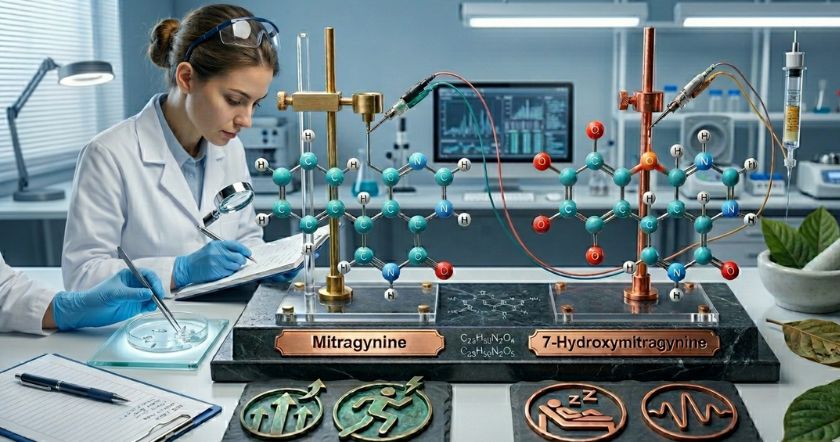
Kratom Alkaloids Explained: Mitragynine & 7-Hydroxymitragynine (7-OH)

In recent years, Kratom has drawn a lot of interest as a plant-based drug with a variety of benefits, from relaxation to increased energy. However, the real influence of healthy Kratom is found in its alkaloid profile, namely in two important compounds: mitragynine and 7-hydroxymitragynine (7-OH).
Anyone wishing to learn more about the best Kratom, whether for study, teaching, or responsible usage, must have a thorough understanding of these alkaloids. This article explains these substances, their functions, and their significance.
Alkaloids In Kratom: What Are They?
Plants naturally contain chemical molecules called alkaloids. They frequently affect human physiology, particularly the nervous system and brain. Caffeine, nicotine, and morphine are typical examples.
Although there are more than 40 known alkaloids in Kratom (Mitragyna speciosa), two predominate in its effects:
- The main alkaloid, mitragynine
- 7. Hydroxymitragynine, a secondary alkaloid with great potency
These substances affect mood, energy, and discomfort perception through their interactions with bodily receptors.
The Main Alkaloid: Mitragynine
Mitragynine: What Is It?
The most prevalent alkaloid in Kratom is mitragynine, which usually accounts for 60–70% of the total alkaloid content in dried leaves.
How It Functions
The main ways that mitragynine interacts with
- Opioid receptors (mu-receptors in particular)
- Adrenergic receptors (which impact vigilance and vitality)
But mitragynine acts differently from conventional opioids:
- Because it only partially activates receptors, it functions as a partial agonist.
- It may have sleepy effects at larger dosages and invigorating effects at lesser ones.
Consequences Of Mitragynine
Researchers and users frequently connect mitragynine with:
- Enhanced vitality and vigilance
- Increased efficiency and concentration
- Moderate discomfort alleviation
- Improvement of mood
Because of this, best Kratom strains with high mitragynine content—such as white and green Kratom strains—are frequently utilized for daytime assistance.
7-Hydroxymitragynine (7-OH): The Strong Partner
7-OH: What Is It?
Natural Kratom leaves contain extremely little 7-hydroxymitragynine (often less than 2%). It is far more powerful than mitragynine, even at low concentrations.
How It Operates
Due of its greater affinity for mu-opioid receptors, 7-OH is:
- More successful in reducing restlessness
- More closely linked to calming and sedative effects
It’s interesting to note that the body produces some 7-OH during the metabolism of mitragynine, which means that its effects may intensify after ingestion.
7-OH’s Effects
This alkaloid is associated with:
- Strong uneasiness alleviation
- Extreme relaxation
- Sedation
- Relaxing effects
Red vein Kratom and other Kratom strains with greater 7-OH content are commonly used for relaxing or night time usage.
Important Distinctions Between 7-OH F And Mitragynine
| Aspect | Mitragynine | 7-Mitragynine hydroxide |
| An abundance | 60–70% high | Minimal (<2%) |
| Influence | Average | Very strong effects |
| Effects | Mild analgesic, stimulating (low dosage) | Potent sedative and analgesic |
| Activity of Receptors | A partial agonist | More potent agonist |
| Optimal Use | Daytime, concentration, and vigor | Nighttime, unwinding, and alleviating discomfort |
The Interaction Of These Alkaloids
Mitragynine and 7-OH have a synergistic impact rather than operating independently. This implies:
- A baseline effect is produced by mitragynine (energy, mood, slight alleviation).
- 7-OH increases intensity and depth, particularly in terms of restlessness relief and relaxation.
This equilibrium illustrates how popular Kratom may feel:
- Initially stimulating, then progressively calming
- Unlike synthetic materials, which are abrupt, they are smooth and progressive.
Factors Affecting Alkaloid Levels
There is no set ratio between mitragynine and 7-OH. It may differ depending on:
1. Type Of Strain
White Vein: Increased mitragynine (more energy) in white vein Kratom
Green Vein: A balanced profile with a green vein Kratom
Red Vein: The red vein 7-OH effects that are somewhat higher (greater relaxation)
2. Maturity Of Leaves
- Younger leaves are more stimulating.
- Mature leaves are calmer and more balanced.
3. The Drying Procedure
Fermentation and sun drying can raise the concentration of 7-OH.
4. Conditions Of Storage
Time, heat, and light can change the makeup of alkaloids.
The Body’s Metabolism And Conversion
The liver’s ability to metabolize mitragynine into 7-OH is one intriguing feature of Kratom. This implies:
- Your body may create some 7-OH after consuming a substance, even if it originally contains very little.
- Over time, effects may become more severe.
This adds to the distinctive, multi-layered experience that consumers frequently describe.
Safety And Things To Think About
Despite being naturally occurring, these alkaloids are still bioactive substances that have significant effects on the body.
Crucial Things To Think About:
- Individual body chemistry, tolerance, and dosage all have a significant impact on the effects.
- High dosages may make adverse symptoms including lightheadedness, or sedation more likely.
- Long-term impacts are not entirely understood, and research is currently underway.
The secret is to utilize it responsibly and intelligently, or just to grasp the science.
Why It’s Important To Understand These Alkaloids
Understanding 7-OH and mitragynine benefits you:
- Recognize the differences in how various strains feel.
- Make decisions based on the intended outcomes.
- Recognize the intricate pharmacology of Kratom
- Keep mythology and science apart.
It is more appropriate to think of Kratom as a complex botanical system powered by alkaloid interactions rather than as a single ingredient.
Conclusion
The main components of Kratom’s actions are mitragynine and 7-hydroxymitragynine, each of which has a unique but complimentary function. While 7-OH brings depth, relaxation, and potency, mitragynine offers vitality, balance, and moderate support.
When combined, they produce the complex experience that has made Kratom so fascinating and spoken about.
Our knowledge of these substances will only grow as study goes on, assisting users, scientists, and decision-makers in navigating this special plant’s future.
FAQ’s
1. Which Alkaloids Are The Primary Active Ingredients In Kratom?
Mitragynine and 7-hydroxymitragynine (7-OH) are the two main alkaloids found in Kratom. While 7-OH is more effective and associated with relaxation and discomfort reduction, mitragynine is the most prevalent and supports energy and mood.
2. Which Is More Potent, 7-hydroxymitragynine Or Mitragynine?
Although it is present in considerably lesser concentrations in Kratom leaves, 7-hydroxymitragynine (7-OH) is far more effective than mitragynine. Its effects are more noticeable due to its higher contact with receptors.
3. Why Does Kratom Feel Calming At Larger Dosages And Stimulating At Lower Ones?
This occurs as a result of mitragynine’s interactions with various bodily receptors. Higher doses seem to boost calming and relaxing effects, mainly due to 7-OH, while lesser doses might increase alertness and vitality.
4. Is 7-Hydroxymitragynine Present In All Kratom?
Yes, but only in tiny amounts. But after taking mitragynine, the body may also produce some of it, which adds to the overall benefits of Kratom.