

Blog
Hidden Kratom Strains You Haven’t Tried

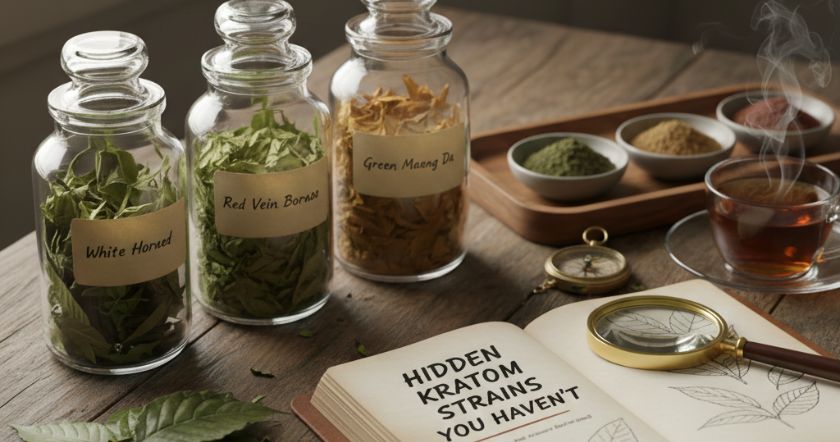
An insightful, fair examination of lesser-known Kratom variations and the opinions of communities and researchers, along with crucial safety and legal background.
The tropical tree known as Kratom (Mitragyna speciosa) is native to Southeast Asia. Compounds found in its leaves interact with brain receptors. Kratom is frequently promoted as a herbal supplement in the US and other countries, but it is also contentious due to safety issues, scant research, and shifting legal requirements.
This article will discuss lesser-known Kratom strains, common misconceptions about them, and the crucial legal, safety, and health facts you should be aware of before using.
A “Kratom Strain”: What Is It?
When people discuss strains of Kratom, they often mean:
- Where the plant was cultivated
- How the leaves were prepared
- Color of leaf veins
- Harvesting techniques
Typical classifications consist of:
Beyond this, however, there are several regional variants and local names that aren’t well-known outside of enthusiast circles.
Why Certain Strains of Kratom Are “Hidden”
In Southeast Asia, “hidden” strains are not always uncommon. For one or more reasons, they are just less well-liked in the Western market:
- Restricted exporting or harvesting
- Local names that don’t correspond to international trademarks
- Specialized markets
- Small-scale manufacturers
According to collectors and seasoned users, these strains frequently have intriguing backstories or distinctive characteristics.
Click Here For Wholesale Inquiries
1. Bali Gold Kratom
Background:
Although Bali Kratom is well-known, some dealers refer to a certain harvest or processing technique as “Bali Gold Kratom.” There isn’t a common definition.
Community Claims:
Best Bali Gold Kratom is smooth and well-rounded, falling in between the classic red vein Kratom and green vein effects, according to people who sell or use it.
Important Note:
Product composition might differ significantly across providers, and there is no scientific definition of “Bali Gold.”
2. Thai Golden, Or Thai Maeng Da Gold
Background:
In Thai slang, “Maeng Da Kratom ” means “pimp grade,” initially suggesting a strong batch of Kratom. “Golden” describes the processing of leaves.
Community Allegations:
In enthusiast circles, Thai Maeng Da Gold Kratom is frequently characterized as:
- Energetics
- Durable
- Strong
Research Reality:
No clinical studies have demonstrated these effects. People’s descriptions of effects are subjective and not supported by science.
Try This Best Selling Product From Bedrock
3. Red Dragon/Borneo Red Dragon
Background:
“Red Dragon” has gained popularity on the internet. It may allude to a particular drying technique or a blend of red vein Kratom leaves.
Community Allegations:
In certain societies, described as:
- Extremely calming
- Durable
- High dosages
Caution:
What one dealer refers to as Red Dragon may differ greatly from another due to the lack of standardization in the term.
4. Variants Of Malay Kratom (Green, White, and Gold)
Background:
Although variations like Green Malay are mostly Western marketing terminology, Malaysian Kratom has been used traditionally.
Community Allegations:
According to some, Green Malay is:
- Equilibrium
- Silky
- Longer-lasting
Once more, these descriptions are based on user reports rather than clinical data.
5. Bentuangie Bali
Background:
The traditional Indonesian method of making bentuangie involves fermenting the leaves.
Community Allegations:
This strain is occasionally said:
- Possesses richer, deeper profiles
- Is more soothing
However, these assertions have not been supported by scientific research.
6. Strains Of Sumatra
Background:
Kratom cultivation has a long history on the Indonesian island of Sumatra.
Community Claims:
These are occasionally viewed as unique due to variations in soil and climate.
Research Note:
There is no evidence to support these assertions; they are based on anecdotal evidence.
What People Say Kratom Does (Based on Community Reports)
Common assertions across strain types include:
- Unwinding
- Vitality
- Concentrate
- Well-being
However, it’s important to comprehend:
- These are user experiences rather than effects that have been demonstrated.
- There is very little scientific study on the effects of Kratom on humans.
- Each person’s reaction is really different.
What Science Doesn’t Say And What It Does Say
Certain substances in Kratom leaves, such as mitragynine, have been examined by researchers,
- There is no solid clinical proof that Kratom is safe or useful for any kind of medicinal use.
- Kratom has not been authorized by the FDA for any medical use.
- Research indicates that Kratom interacts with brain receptors, but it’s unknown what this means for one’s health.
Major health agencies are still cautioning that further study is required this year. Certain data points to significant liver concerns, drug interactions, and potential reliance.
To put it briefly, claims regarding the distinct “effects” of various familiar Kratom strains are nearly completely unproven.
Safety And Health Concerns
Teens in particular should be aware of the following if they are interested in learning more about Kratom:
1. Possible Adverse Reactions
The following adverse effects have been reported:
- Feeling queasy
- Lightheadedness
- A headache
- Sleepiness
- Digestive problems
These are recognized impacts that individuals describe; they are neither uncommon nor benign.
2. Withdrawal And Dependency
Frequent Kratom usage has been linked to:
- Reliance
- Symptoms of withdrawal upon quitting
For this reason, medical specialists advise being cautious.
3. Unknown Long-Term Consequences
The effects of prolonged usage on the brain, liver, heart, and other organs are little studied.
4. Purity And Variability
Products made with Kratom might differ greatly. Some can be tainted or incorrectly labeled.
5. Interactions with Additional Substances
It might be risky for Kratom to mix with alcohol, drugs, or other supplements.
The Legal Environment
The legal status of Kratom varies by nation, state, and area. As a supplement, it is permitted in certain locations but restricted or prohibited in others.
Before considering Kratom, you ought to:
- Verify local legislation.
- Teens should never take Kratom without adult supervision and medical advice.
Why Some Individuals Are Even Interested in Kratom
People in Kratom groups occasionally claim to be searching for:
- Natural substitutes for caffeine
- Strategies for boosting mood
- Conventional herbal treatments
However, it’s crucial to keep advice and usage apart from curiosity and conversation, particularly for a developing brain.
Most medical experts concur that:
- Adolescents should abstain from brain-damaging chemicals.
- It’s okay to be curious, but learning from science is safer than doing dangerous experiments.
Conclusion
Many lesser-known strains of Kratom subtly provide distinctive impacts and experiences; it’s not only about the well-known, well-liked strains. Whether you’re seeking deeper relaxation, balanced focus, or soft energy without the intensity of popular alternatives, these secret Kratom strains allow you to refine your habit. You may have a better understanding of how minute variations in vein color, location, and processing affect your experience by investigating them. As usual, careful use and high-quality sources are crucial, but continuing to be intrigued about these lesser-known strains might help you discover your new favorite.