

Blog
How The Gut Microbiome Interacts With Botanical Medicines Like Kratom

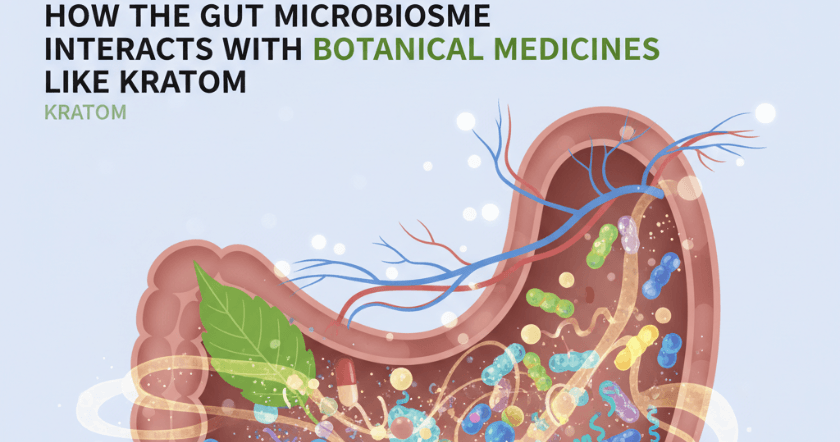
The use of plant medicine has increased dramatically during the past ten years. Alkaloids, polyphenols, polysaccharides, and terpenes are complex combinations found in plants that seldom ever work alone. The billions of bacteria that inhabit our gastrointestinal system, known as the gut microbiome, are now known to have a significant role in the transformation of botanical substances, their availability to the body, and the final impact they have. This implies that the microbiota may alter the effects and safety profile of botanicals like Kratom (Mitragyna speciosa). This article sets out the practical consequences and unanswered problems, discusses the science, and reviews the latest research on Kratom.
A Brief Overview: What Is Contained In Kratom?
Numerous bioactive compounds can be found in Kratom leaves. The two most well-known are the indole alkaloids 7-hydroxymitragynine and mitragynine; Kratom also includes polyphenols, flavonoids, and other phytochemicals in addition to several lesser alkaloids. Because various chemical groups interact differently with microorganisms and human enzymes, the combination of alkaloids and polyphenols is significant.
General Ways By Which The Gut Microbiota Affects Botanical Medications
Researchers have discovered many important mechanisms via which gut bacteria impact plant medicines:
1. Gut-mediated metabolism, or biotransformation. Alkaloids, polyphenols, and glycosides can be chemically altered by gut bacteria’s enzymes, which can either activate or deactivate them. Receptor affinities, distribution, and absorption can all be altered by these processes.
2. Altering bioavailability. Large compounds are frequently broken down by microbes, increasing intestinal absorption or changing systemic exposure (for instance, by breaking down polyphenol glycosides into smaller aglycones).
3. Generating active metabolites. Metabolites that differ from the parent molecule in their biological action can be produced by microbes. Both adverse effects and therapeutic effects may be influenced by these metabolites.
4. Altering host response and gut ecology. Certain botanicals work as prebiotics by either promoting the growth of some beneficial microorganisms (including Lactobacilli and Bifidobacteria) or suppressing others, which has an impact on systemic inflammation, immunology, and gut barrier function.
5. Indirect interactions with the enzymes that break down drugs in humans. The quantity of parent chemical that reaches the liver can be changed by the microbiome’s activities, and some bacterial metabolites can impact host CYP enzymes and transporters, altering the metabolism of other medications.
PMC
Together, these processes provide a reciprocal connection in which botanicals may alter the microbiome and the microbiota can alter plant pharmacology.
Unlock Exclusive Deals — Join Our Wholesale Program Now!
Evidence About Kratom + Microbiota (Current Research)
Although research on Kratom-microbiome interactions is still in its infancy, current in-vitro, animal, and colon-model studies offer some early indications:
- Water-soluble Kratom extracts have been shown to change microbial composition and short-chain fatty acid (SCFA) production in vitro in fecal batch and colon-model experiments using human microbiota or model colons. This suggests that Kratom constituents are fermentable substrates and can modify microbial metabolism. Changes in metabolite profiles and alterations in some taxa that may have biological significance are reported in these studies.
- Studies on rats reveal that supplementing with Kratom extract alters the makeup of the gut microbiome, enhancing certain taxa linked to advantageous activities while simultaneously elevating others that have been connected to unfavorable results in various circumstances. These alterations seem to depend on formulation and dosage. Animal microbiome changes demonstrate that Kratom can change gut ecology, but they do not immediately apply to humans.
- Evidence of in vitro biotransformation (more general context). There is strong evidence that gut microorganisms can metabolize alkaloids and polyphenols from other plants, frequently forming metabolites with unique activity, even if there is little direct evidence of gut bacteria making particular active metabolites from mitragynine in people. It is therefore physiologically conceivable that gut bacteria also alter the components of Kratom.
All things considered, preliminary data suggest that Kratom interacts with the gut microbiome, changing its makeup and microbial metabolites. However, there are currently no human clinical trials that connect these alterations to particular health impacts, advantages, or hazards.
Implications For Pharmacology And Safety
Some real-world Kratom findings can be explained by an understanding of microbial interactions:
- Different people’s reactions. Similar dosages of Kratom are reported to have wildly different effects. Individual microbiome variations that alter the amount of an active metabolite generated or absorbed are probably responsible for some of that variability. (This same approach applies to various medicines and botanicals.)
- Changes in medication interactions might occur. Human drug-metabolizing enzymes like CYP2D6 have been shown to interact with Kratom alkaloids, such as mitragynine. Kratom’s capacity to block hepatic enzymes may be indirectly altered if the microbiota modifies the type or concentration of mitragynine, which might impact interactions with prescription medications that are CYP substrates. In a similar vein, compounds generated from the microbiome may also affect host enzymes. As a result, until further information is available, cautious co-use of Kratom with other drugs is advised.
- Impacts and hazards caused by metabolites. There would be safety repercussions if gut flora changed the components of Kratom into substances with more potent opioid-like or hazardous effects. On the other hand, certain components may be detoxified by microbial metabolism. Simply put, we lack conclusive, repeatable human data on the metabolites that are produced in vivo and their functions.
Useful Lessons For Patients And Medical Professionals
1. Anticipate fluctuations. Microbiome variations might be one reason why different people react to Kratom in various ways.
2. When combining drugs, exercise caution. Avoid combining Kratom (mitragynine) with prescription medications that have limited therapeutic windows without a doctor’s advice, since Kratom can inhibit CYP enzymes, and microbiome-mediated alterations may affect that impact.
3. Formulation is important. Distinct profiles of alkaloids and polyphenols are delivered via whole-leaf Kratom, water extracts, alcoholic extracts, and Kratom capsules; these chemical profiles will interact with gut microorganisms in distinct ways. Research indicates that water-soluble fractions have quantifiable impacts on the in vitro fecal microbiota.
4. Microbiome health and diet are probably important. Long-term use of antibiotics will modify interactions, and a varied, high-fiber diet that fosters good bacteria may change how botanical substances are digested.
5. See a clinician if you use medication or have medical problems. particularly if you use anticoagulants, opioids, antidepressants, or other medications that are processed by CYP enzymes.
Research Gaps: Areas In Need Of Improved Data
- Human clinical investigations measuring: (a) what metabolites of Kratom are found in plasma or urine and if they originate from bacterial metabolism; (b) how Kratom alters the composition of the human gut microbiome over days or weeks; and (c) connections between microbiome alterations and clinical outcomes. Human validation of early in vitro and animal signals is required.
- Mechanistic identification of the enzymes and microbial species that break down particular Kratom polyphenols and alkaloids.
- To find the threshold quantities at which microbiome effects become clinically significant, dose and formulation experiments are conducted.
- Studies that link Kratom’s known interactions with human liver enzymes (CYPs) and transporters to alterations in the microbiota.
Conclusion
The gut microbiota has a significant, although sometimes disregarded, role in the action of plant medications. New in vitro and animal research on Kratom indicates that the plant can change the composition of the microbiome and that gut microbes may be able to change the components of Kratom. This raises the possibility of explanations for both user-to-user variations in effects and microbiome-mediated modifications to the safety or Kratom’s efficiency. The tale is encouraging but unfinished since there is currently a lack of solid human clinical data linking particular microbial changes to specific health consequences.