

Blog

How Bedrock Botanicals Sources Kratom: From Farm To Lab

Mitragyna speciosa (scientific name Kratom) has been gaining interest as a botanical with an extensive history of traditional use in southeast Asia. Now, well-known vendors such as Bedrock Botanicals focus on transparency, quality, and ethical sourcing in their kratom supply chain. The history behind the kratom making it through tropical leaves in a farm to strictly tested products in the hands of consumers tells how much care is taken in the selection, processing and scientific approval of the product.
Kratom vs. Yerba Mate: Best Natural Energy Boosters- Bedrock Botanicals
1. Sourcing From Trusted Farms
The process starts at the source that is the farms where kratom trees are cultivated. Bedrock Botanicals has viable connections with the established kratom cultivators in major regions where Mitragyna speciosa grows well. Such farms are chosen on the basis of
Sustainable Farming Practices
The partners in the farm are selected due to their expertise and willingness to embrace responsible farming. Sustainable harvesting is about ensuring none of the leaves that are picked off the kratom trees are picked before the tree is fully mature so that the kratom potency is maintained.
Long‑Term Relationships
Rather than relying on anonymous brokers, Bedrock Botanicals works directly with growers who have longstanding reputations in the botanical industry. This direct tie to the source helps ensure consistency in quality and traceability of every batch.
Ethical And Transparent Partnerships
Ethical sourcing means more than just quality, it reflects fair treatment of farm laborers, respect for local communities, and adherence to good agricultural practices. By vetting suppliers personally, Bedrock Botanicals cuts out uncertainty and keeps a closer eye on how their raw plant material is cultivated.
Kratom vs. Matcha: Compare, Contrast & How To Mix Read Here
2. Harvesting And Initial Processing
Once plants reach maturity, workers carefully harvest the kratom leaves. This stage is critical because the timing and technique of harvesting directly influence the botanical’s natural alkaloid profile, compounds that give kratom its unique characteristics.
Hand‑Picked For Quality
Leaves are often hand‑selected to ensure only the best foliage, free of damage or disease, moves forward in the process.
Drying In Controlled Conditions
To preserve freshness and reduce degradation, freshly collected leaves are dried using controlled methods. Proper drying is important for maintaining potency and preventing unwanted microbial growth, which could compromise quality.
Grinding And Batch Preparation
Once sufficiently dried, the leaves are milled into powders. These powders form the raw material for Bedrock’s various kratom products, such as powders, capsules, shots, and extracts.
3. Rigorous Lab Testing For Purity And Consistency
A hallmark of Bedrock Botanicals’ process is the emphasis on independent lab testing. Before any product is released to customers, each batch undergoes thorough scientific analysis to ensure it meets rigorous standards.
Third‑Party Verification
Rather than relying on in‑house results alone, Bedrock sends samples to independent laboratories. These labs test for
- Potency Markers identifying levels of key alkaloids to ensure consistent performance.
- Purity confirming the absence of unwanted substances.
- Contaminants screening for pesticides, heavy metals, microbial pathogens, or other impurities that could pose safety concerns.
This lab‑verified approach means consumers receive kratom products backed by objective data and authentic results.
4. Quality Assurance And Compliance
Beyond lab testing, Bedrock Botanicals uses internal quality assurance protocols to validate every step of the supply chain. This includes.
Batch Documentation
Detailed records are kept for each batch so that it’s possible to trace the material back to its farm of origin and observe every processing step.
Packaging Integrity
Products are packaged in facilities that meet high cleanliness standards, ensuring freshness and protecting against environmental contamination.
Transparency And Consumer Trust
Bedrock Botanicals provides educational content and lab reports with many products, allowing consumers to see exactly what they’re getting and why it was selected.
5. From Lab to Shelf
Once products pass all testing and quality checks, they are ready for packaging and distribution. Bedrock offers a variety of formats from traditional Kratom powders and Kratom capsules to innovative delivery forms like liquid shots all crafted with transparency in mind.
In a market where quality can vary widely, this lab‑backed journey from farm to formulation helps ensure that customers receive botanicals that are clean, consistent, and reliable. Each product reflects a careful chain of custody from seasoned growers in Southeast Asia to meticulous lab analysis and final preparation in facilities that prioritize quality.
Jong Kong Kratom: Complete Guide & Key Insights Read Here
The Role of Environmental Impact In Kratom Sourcing
As consumers become more environmentally conscious, the sustainability of the product they purchase is increasingly important. Bedrock Botanicals takes the ecological footprint of kratom cultivation seriously, ensuring their practices minimize environmental impact.
Why Lab-Tested Kratom Matters: 5 Benefits For New And Experienced Users
Forest Conservation
Kratom is primarily grown in tropical climates, and sustainable farming practices help protect valuable forest ecosystems. By prioritizing conservation efforts, Bedrock Botanicals supports growers who practice responsible land use and avoid deforestation.
Water And Resource Management
Efficient water usage is crucial in tropical agriculture. Bedrock Botanicals encourages its farming partners to implement resource-saving techniques, ensuring that water consumption is minimized without sacrificing crop quality.
Soil Health And Biodiversity
Bedrock works with farmers who focus on maintaining soil health and promoting biodiversity, ensuring long-term agricultural productivity and a healthier ecosystem.
What Is MIT In Seltzers? A Guide To Kratom’s Microdose Innovation – Noms
Ethical Practices In The Kratom Industry
As kratom grows in popularity, ethical sourcing and sustainability have become essential. Bedrock Botanicals upholds high ethical standards across the supply chain, ensuring fairness, transparency, and environmental responsibility.
Fair Trade And Fair Wages
Bedrock works directly with farmers to ensure they are paid fairly and work in safe conditions. This not only supports the farmers but also fosters long-term, sustainable relationships.
Supporting Local Communities
In addition to fair wages, Bedrock invests in community development, helping improve education, healthcare, and infrastructure in kratom-growing regions. By empowering local farmers, Bedrock promotes self-sufficiency and long-term growth.
Environmental Sustainability
Bedrock prioritizes eco-friendly farming practices, such as crop rotation and minimal pesticide use. The company also supports water conservation and efforts to preserve biodiversity, ensuring kratom is grown responsibly.
Transparency And Traceability
Bedrock provides full transparency by offering traceability from farm to final product. Consumers can access information about the sourcing, quality, and testing of each kratom batch, ensuring accountability.
Consumer Education
Bedrock is dedicated to educating consumers on responsible kratom use. This includes dosage recommendations, potential side effects, and the importance of consulting healthcare professionals before use.
Buy NOMS Kratom Seltzer In Bulk – Wholesale Program
Conclusion
The path of kratom from farm to laboratory highlights a blend of tradition, science, and ethical standards. By partnering directly with reputable farms, applying controlled processing techniques, and insisting on thorough third‑party testing, Bedrock Botanicals strives to set a high bar in an increasingly crowded botanical marketplace. For consumers interested in quality and traceability, understanding this journey offers reassurance and insight into what makes a premium kratom product trustworthy and transparent.
How To Choose Pure Kratom Powder: 5 Lab-Testing Red Flags
]One of the most talked-about botanicals in herbal health is still Kratom (Mitragyna speciosa). Kratom powder’s historic usage and distinctive alkaloid profile make it valuable to many consumers. However, quality and purity differ greatly between sellers since Kratom products are supplied in a market that is mainly unregulated.
Seeking accurate lab testing, not just marketing claims, is one of the best methods to safeguard yourself as a customer. This tutorial explains how to select pure Kratom powder and identifies five lab-testing warning signs that should make you reconsider your purchase.
Kratom Hangover: What It Is & How To Handle It – Bedrock Botanicals
The Significance Of Lab Testing
Since Kratom is marketed as a botanical supplement rather than a prescription drug, there isn’t a single requirement that all vendors must fulfill. This may result in:
- Variations in potency across batches
- Adulteration with impurities or additives
- Incorrect strain or origin labeling
- Contamination by microorganisms, solvents, or heavy metals
Beyond what a seller states, reputable lab testing provides you with an independent evaluation of a product’s safety, purity, and chemical composition.
Tests for the following should be included in a reliable lab report, also known as a Certificate of Analysis or COA:
- Microbiological pollutants
- Heavy metals
- Residues of pesticides
- Content of alkaloids (mitragynine, 7-hydroxy-mitragynine)
- Remnant of the solvent (if extracts were utilized)
How To Read A COA Before We Get Started
Typically, a laboratory document called a Certificate of Analysis contains the following:
- Name and certification of the laboratory (e.g., ISO/IEC 17025)
- The testing date
- Sample ID that corresponds to the batch or product number
- Utilized analytical techniques (HPLC, GC-MS, ICP-MS, etc.)
- Findings compared to permissible levels for pollutants
Reputable lab reports are clear and precise rather than ambiguous or general.
Red Flag 1: Absolutely No Third-Party Testing
The absence of a lab test is the biggest red flag. Be wary if a brand is unable or unwilling to offer a COA from an accredited third-party laboratory.
Why Is This Important
- Without a real COA, claims about being “pure” or “lab tested” are meaningless.
- The seller’s word alone determines quality in the absence of third-party verification.
- Many pollutants, such as microorganisms or heavy metals, cannot be found without specific testing.
What To Search For Instead:
- The COA should be publicly available through the best Kratom products site or QR code
- Sample IDs that correspond to the precise batch you’re purchasing
- A genuine lab name (not an internal lab)
It’s a warning sign if none of those are present.
Red Flag 2: Vague Or Generic Reports
A “lab test” that resembles a vibrant chart or certificate but lacks precise data may be posted by some suppliers. These frequently contain claims such as:
- Safety tested
- Our team certifies quality.
- Third-party tested” (no lab name or findings)
Why Is This Important
A certificate is only a promotional picture in the absence of actual figures or technical information. A genuine COA has to include:
- Tests for precise analytes
- Results presented in units (e.g., ppm, % w/w)
- Testing techniques (such as HPLC for alkaloids)
Advice: Actual lab reports provide clear results and comprehensive tables, much like scientific publications.
Jong Kong Kratom: Complete Guide & Key Insights
Red Flag 3: Too Much Contamination
The next step after obtaining a COA is to determine whether any contaminants, such as microorganisms, heavy metals, or solvent residues, show up above permissible levels. Here are a few typical pollutants to be aware of:
Heavy Metals
Include mercury, cadmium, lead, and arsenic. Soil or incorrect treatment may be the source of them.
- Red Flag: Outcomes above established safe thresholds, which vary by area but are often extremely low.
- Why It Matters: Long-term exposure to heavy metals can lead to health problems.
Microbiological Pollutants
Such as Salmonella, E. Coli, or mold and yeast.
- Red Flag: Any presence of harmful microorganisms is a red signal.
- Why It Matters: Particularly for those with weakened immune systems, these organisms can provide major health hazards.
Residues Of Pesticides
Pesticide traces may be left behind by improper cultivation.
- Red Flag: Pesticides that can be detected, particularly those that are prohibited or restricted.
- Why It Matters: A lot of pesticides are poisonous and shouldn’t be consumed by humans.
What A COA Should Have
- There are no harmful bacteria that can be detected.
- Heavy metals are much below regulatory limits
- No traces of pesticides
Reevaluate the product if any of these appear at alarming levels.
Red Flag 4: False Alkaloid Claims
The primary alkaloids in Kratom, primarily mitragynine and 7-hydroxy-mitragynine, are frequently linked to its effects. Some vendors may quote alluring statistics, such as “20% alkaloids!” or “high potency,” but in the absence of context, those figures may be deceptive.
Why Is This important
- Naturally, different strains have different levels of alkaloids.
- Without specifics, the overall “alkaloid percentage” is not necessarily useful.
- These figures might be falsified in the absence of appropriate laboratory testing procedures.
Things To Look For
- Specific alkaloids and their measured concentrations should be included in the COA.
- The analytical method (e.g., HPLC) should be indicated.
Be skeptical if a brand claims high alkaloid levels without providing a scientific analysis.
Red Flag 5: The Product Doesn’t Match The Lab Reports
Reports must match the particular product or batch you are purchasing, even if they do exist.
What To Look For Is As Follows
- Lot Or Batch Number Matches: The product’s batch code and the COA sample ID should match.
- Product Name Matches: The strain you’re buying should precisely match the one indicated on the COA.
- Date Of Testing: The laboratory test needs to have been conducted recently, preferably within a few months after its release.
Examples Of Red Flags
- A generic COA with no batch ID and the label “Kratom Powder.”
- A COA from a strain other than the one you are purchasing
- An out-of-date report that has no bearing on the market today
The COA is largely worthless and serves as a warning indication if it doesn’t match the actual products.
What Is MIT In Seltzers? A Guide To Kratom’s Microdose Innovation
Beyond Laboratory Tests: Additional Considerations For Selecting Pure Kratom Powder
Lab testing is important, but it’s just one aspect of selecting high-quality Kratom powder form. Here are some more factors to think about:
1) Transparency In Sourcing
Reputable merchants describe the location and method of harvesting their Kratom, including details about plant maturity and the specific area.
2) Accurate Identification Of Strain
Reputable vendors don’t utilize made-up or inflated strain names for marketing purposes; instead, they use well-known Kratom strain names like Red Bali Kratom powder and Green Malay Kratom powder.
3) Storage & Packaging
Best Kratom is shielded from air, light, and moisture by proper packing, all of which deteriorate its quality.
4) Client Testimonials
When paired with lab data, real user feedback—particularly about consistency and effects—can offer valuable insights.
5) Return Guidelines
Clear refund or return procedures are frequently offered by vendors that are confident in their products.
Tap to Access Wholesale Savings Today
Conclusion
In a competitive market, selecting 100% pure Kratom powder might be tricky, but your best bet should be lab testing. Being able to identify warning signs, such as missing, ambiguous, or inconsistent COAs, enables you to steer clear of dubious items and make safer choices.
The Kratom’s effects, a botanical substance containing complex alkaloids, differ depending on the strain and individual. A safe and educated experience includes prudent purchase, cautious dosage, and seeking medical advice when necessary.
Finding the best Kratom powder that is pure, consistent, and more in line with your expectations—without unpleasant surprises—is far more probable if you concentrate on reliable lab testing, transparent sourcing, and clear product information.
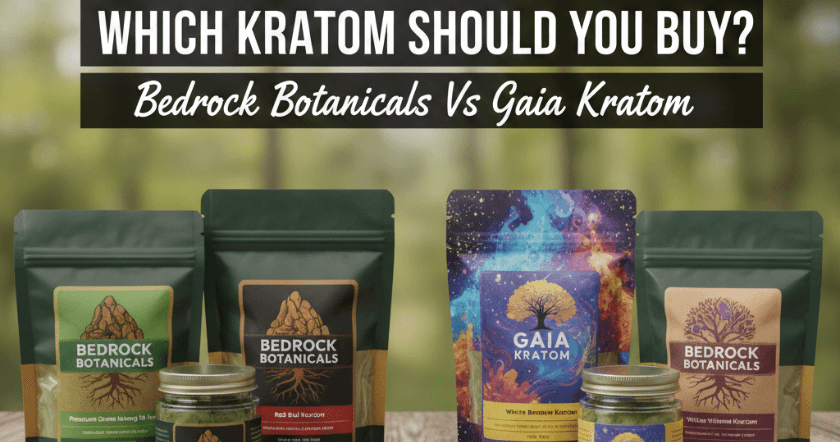
Which Kratom Should You Buy? — Bedrock Botanicals Vs Gaia Kratom
In the field of herbal health, Kratom is still one of the most talked-about botanical products. Both novice and seasoned consumers frequently ask themselves, “Which best Kratom brand should I choose?” due to the increasing number of merchants, both online and in specialty stores. Bedrock Botanicals and Gaia Kratom are two well-known brands in the Kratom industry. Both have a large assortment of strains, a strong brand presence, and a devoted clientele; nevertheless, their approaches to sourcing, product lines, pricing, and customer service differ.
To help you select the best Kratom for your needs, this article will compare the two brands side by side. Individual experiences differ, just as with any botanical substance, and safety should always come first.
What Is MIT In Seltzers? A Guide To Kratom’s Microdose Innovation
1. Overview Of The Brand
Bedrock Botanicals
Bedrock Botanicals has gained recognition for its extensive strain assortment, open sourcing statements, and emphasis on quality assurance. Bedrock’s emphasis on product uniformity and lab testing is appreciated by many customers.
Kratom Gaia
One of the most well-known best Kratom brands on the market, famous Gaia Kratom offers a wide range of Kratom strains and is known for its dependable potency and quick shipment. Gaia’s endurance and steady offers often result in excellent ratings in customer evaluations and forums.
2. Quality & Sourcing
Bedrock Botanicals
Sourcing Claims: Bedrock Botanicals frequently emphasizes its direct sourcing connections with Southeast Asian producers, mostly in Indonesia.
Harvesting Techniques: To conserve alkaloids, they advocate for traditional drying techniques and cautious harvest scheduling.
Quality Control: The purity and pollutants of many of Kratom products are tested by third parties, and the findings are occasionally made public.
Benefits include:
- A wide range of strains with thorough descriptions
- A focus on quality and testing
- Transparency regarding origin
Cons:
Because of testing and sourcing procedures, some items could be more expensive.
Kratom Gaia
Sourcing Claims: Gaia also purchases its Kratom from Indonesian plantations with established collaborations.
Product Consistency: When repeat business is crucial, Gaia has established a solid reputation for batch consistency.
Testing: Gaia distributes testing information on occasion and does internal quality checks.
Advantages include:
- Large inventory and quick turnover, well-established supply chains, and a solid reputation for consistency.
Cons:
- Compared to certain rivals, there is occasionally less public openness on certain third-party testing.
3. Strain Variety & Product Range
Although a wide variety of the best Kratom strains are available from both companies, there are variations in terms of format, availability, and name.
Bedrock Botanicals
Red Vein Strains: Red vein strains, such as Red Bali Kratom, Red Maeng Da, and Red Horn, are well-liked for their mild to moderate effects.
Green Vein Strains: Green Malay, Green Maeng Da, and Green Borneo Kratom are examples of green vein strains that are frequently selected for their balanced effects.
White Vein Strains: White vein strains, such as White Maeng Da Kratom and White Borneo, are commonly sought for inspiration and focus.
Mixed-Vein: Mixed-vein alternatives for intermediate effects are known as specialty blends.
Formats: Sampler packs, Kratom capsules, and powder.
Bedrock provides taster packs for novices and often refreshes limited-edition or seasonal ranges.
Kratom Gaia
Staple Kratom Strains: Staple Kratom strains include Red Bali Kratom, Green Malay, White Borneo Kratom, and Yellow Vietnam.
Premium & Reserve Lines: A few exclusive names and superior options.
Mixes: For broad impact profiles, use proprietary or mixed vein mixes.
Formats: Extracts, Kratom powder, Kratom capsules, and improved choices.
Many strains are regularly available in Gaia’s collection, which is often extensive.
Kratom Seltzer 101: What It Is & Why Noms Leads the Market
4. Effects & Potency
Each strain and batch has a different perceived potency, and each person reacts differently. However, industry insights and customer feedback reveal certain broad tendencies.
Bedrock Botanicals
Bedrock’s strains seem clean, balanced, and consistent throughout batches, according to several users. For instance:
White veins: Frequently seen as sharper, concentrating effects
Green Veins: A little energy boost that is balanced
Red veins: Calm, soothing effects
Bedrock has mild to moderate impact profiles and is preferred by certain people for daily usage.
Kratom Gaia
Strong strains from Gaia are well-known, particularly in the Green and White categories. A few clients report:
- White strains have strong energy effects.
- Red Kratom strains and a profound calm
- Select greens provide dependable attention and mood assistance.
Users looking for visible effects find Gaia intriguing because of its reputation for potency; however, opinions on potency differ.
5. Cost And Value
For both novice and seasoned consumers, pricing is a crucial factor.
Bedrock Botanicals
- Some products have somewhat higher prices.
- Sampler packs and larger quantities may provide better value.
- Price may be explained by third-party testing and openness.
Kratom Gaia
- Frequently, a little less expensive per gram
- Frequent sales and large discounts
- Competitive pricing is aided by a large inventory.
Value Advice: Sampler packs and bulk purchases from both brands will assist new customers in exploring possibilities without going over budget.
6. Reviews And Customer Experience
Bedrock Botanicals
Marketing & Support: Having an active web presence with FAQs, strain guidelines, and other resources
Customer Reviews: Consistency, flavor, and effects are frequently praised.
Shipment: Clear order monitoring and generally dependable shipment
Kratom Gaia
Brand Loyalty: Strong recurring business from a long-standing clientele
Users’ Reviews: Reviews from Kratom users confirm quick shipment, consistent batch quality, and observable results.
Support: Responsive social media presence and active client service
Although individual experiences differ greatly, both companies continue to have strong reputations.
7. Which Is Better For Novices?
Beginners frequently want direction, clarity, and minimal impact.
Bedrock Botanicals: They are highly beginner-friendly with their trial packs and thorough strain information.
Gaia Kratom: Still accessible; however, novice users may find some strains more potent.
Recommendation: Bedrock Botanicals’ teaching materials and sampler packs are a great place to start if you’re new to Kratom and want a guided approach.
8. Which Is Better For Users With Experience?
Potency and diversity may be more important to seasoned users.
Gaia Kratom: Provides potent strain patterns that are valued by many experienced consumers.
Bedrock Botanicals: Still great, especially for anyone looking for more subtle or clean effects.
Recommendation: Gaia’s large selection and strong strains may suit your tastes if you’ve already tried Kratom and want a variety of effects.
9. Kratom Purchasing Advice (All Brands)
Regardless of the brand you select, following these basic practices may guarantee safer use and a better experience:
Begin With A Modest Sum
To see how a strain suits you, start with a smaller size.
Begin With Lower Doses
Before reassessing the results, start with lower dosages and wait at least 45 to 60 minutes.
Examine Local Laws
The legality of Kratom differs by area, so always find out if you may use and possess it where you reside.
Store Correctly
Kratom should be stored out of direct sunlight in a cool, dry location.
Conclusion
What you value most will determine whether you choose Bedrock Botanicals or Gaia Kratom: potency and large inventory, or transparency and instructional assistance. Although they cater to rather distinct demographics and tastes, both companies are well-known and respected.
People react to Kratom in various ways, so it’s important to make thoughtful, educated decisions and take the right amount. You may choose a Kratom brand and Kratom products that suit your needs by looking through strain descriptions, starting with lower doses, and seeing how your body reacts.
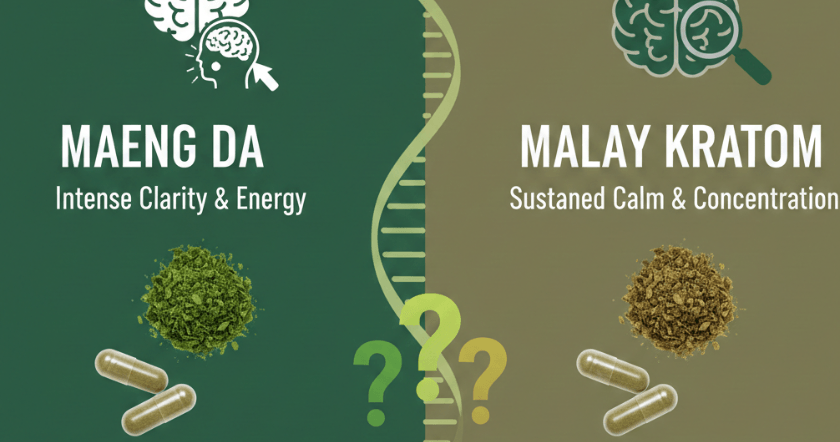
Maeng Da vs Malay Kratom: Which Is Better For Focus?
Kratom, which is a product of the Mitragyna speciosa tree found in southeast Asia, has become very popular because of its ability to boost most aspects of well-being such as energy, mental clarity and focus among others. Two of the most common strains of Kratom include Maeng Da and Malay among the other types. Although they are both reputable in terms of stimulating effects, their responses may vary greatly depending on preferences and needs of individuals.
Let’s compare Maeng Da and Malay Kratom. We’ll also have a particular focus on the aspects of how it enhances mental focus and productivity.
Buy NOMS Kratom Seltzer In Bulk – Wholesale Program
Understanding Kratom Strains
The strains of kratom are usually divided into the color of the leaves vein red, green, and white. These categories are an indication of the alkaloid profile of the strain, which determines its effects on the user.
- Red Vein Kratom is known for its calming effects.
- White Vein Kratom is often used for stimulation and energy.
- Green Vein Kratom falls in between, offering a balanced blend of both energizing and calming effects.
Both Maeng Da and Malay Kratom come in varying vein types, but they are most commonly associated with white and green veins.
Let’s dive deeper into the characteristics of each.
What Is Maeng Da Kratom?
Maeng Da Kratom is renowned for its potent energizing and nootropic effects, making it a popular choice among those seeking to enhance focus, alertness, and productivity. The strain is often considered one of the most robust forms of Kratom available due to its unique alkaloid composition. Originating from Thailand, Maeng Da is usually classified into three types: White, Green, and Red. For focus and productivity, White Maeng Da is the most commonly used, as it tends to deliver the most significant cognitive benefits.
Effects Of Maeng Da Kratom
- Mental Clarity: Many users report heightened concentration and cognitive focus, making it ideal for tasks requiring mental effort.
- Energy Boost: White Maeng Da is renowned for providing a clean, sustained energy boost without feeling jittery.
- Enhanced Motivation: Users often feel a surge of motivation and drive, which can lead to increased productivity during tasks.
Kratom Vs. Bacopa Vs. Lion’s Mane: Top Plant Nootropics
What Is Malay Kratom?
Malay Kratom, or Malaysia Kratom, comes from the Malaysian region of Southeast Asia. It is particularly popular for its balanced effects, which provide both mild energy and moderate focus enhancement. The strain is often considered less potent than Maeng Da but more soothing and long-lasting.
Malaysian Kratom comes in both green and white varieties, with Green Malay Kratom being one of the most famous. It is known for its unique ability to provide sustained focus without the intense stimulation associated with more potent strains like Maeng Da.
Effects Of Malay Kratom
- Focus and Concentration: Green Malay Kratom, in particular, is valued for its ability to enhance focus over extended periods.
- Balanced Energy: Users often experience a smooth energy lift, which is ideal for maintaining productivity without feeling overstimulated.
- Mood Elevation: Malay Kratom also has subtle mood-enhancing properties that may improve overall well-being during periods of mental exertion.
Maeng Da vs Malay Kratom: Which Is Better For Focus?
To determine which Kratom strain is better for focus, we need to compare their effects in key areas like energy, mental clarity, and duration of effects. Let’s take a closer look at the differences and similarities between Maeng Da and Malay Kratom.
Energy Levels
Maeng Da Kratom: Known for its high potency, Maeng Da Kratom is favored by users who need a significant energy boost to tackle intense focus-oriented tasks. It provides a quick and powerful lift, but the effects may wear off after a few hours.
Malay Kratom: While not as potent as Maeng Da, Malay Kratom offers a more sustained and stable energy boost. It is ideal for those who need consistent energy without sudden peaks or crashes, which is particularly useful during long work sessions or study periods.
Mental Focus And Clarity
Maeng Da Kratom: The White Maeng Da strain, in particular, is highly regarded for boosting mental focus and clarity. It is often used by students, professionals, and individuals who need to maintain peak cognitive function during mentally demanding tasks.
Malay Kratom: Malay Kratom, especially the Green Malay variety, is known for promoting focus and concentration over an extended period. Its effects are generally more subtle and less intense than Maeng Da but are still highly effective for prolonged mental activities.
Duration Of Effects
Maeng Da Kratom: Maeng Da’s effects typically last between 4 to 6 hours, depending on the individual’s tolerance and dosage. This makes it suitable for short bursts of high-focus activity.
Malay Kratom: The effects of Malay Kratom last longer, often up to 8 hours, providing a more sustained focus without the need for re-dosing.
Third Eye vs Kratom Gorilla: Which Suits You Best?
Side Effects And Tolerance
Maeng Da Kratom: Due to its potency, Maeng Da can lead to overexertion or mild discomfort for sensitive individuals. It’s essential to start with a low dose to gauge tolerance.
Malay Kratom: Malay Kratom is generally considered gentler, with fewer reports of discomfort. Its balanced nature makes it a good option for users who are sensitive to stronger strains.
How To Choose The Right Strain For Focus?
When selecting between Maeng Da and Malay Kratom for focus, several factors should be considered:
Intensity Of Focus Needed: If you need a sharp, short-term burst of focus for an intense task, Maeng Da may be more appropriate. If you require long-lasting focus throughout the day, Malay Kratom may be a better choice.
Energy Levels: For a more intense energy lift, Maeng Da is ideal. However, if you want a steady, long-lasting energy flow, Malay Kratom may provide a better experience.
Tolerance And Sensitivity: Those new to Kratom or sensitive to stimulants may want to start with Green Malay Kratom due to its milder effects.
Maeng Da vs Malay Kratom: Quick Comparison
| Feature | Maeng Da Kratom | Malay Kratom |
| Energy Level | High, intense energy boost | Moderate, sustained energy boost |
| Focus and Clarity | Sharp focus, quick mental clarity | Gradual focus, steady concentration |
| Duration of Effects | 4-6 hours | 6-8 hours |
| Side Effects | Possible overstimulation for sensitive users | Gentler, fewer side effects |
| Best For | Short-term intense focus | Long-term focus and energy |
| Tolerance Level | May require building up tolerance | Suitable for most users, even beginners |
Conclusion
Both Maeng Da and Malay Kratom are excellent choices for enhancing focus and productivity, but they offer distinct experiences based on your needs. If you require an immediate, powerful boost to focus and energy, Maeng Da is the better option. However, if you seek a smoother, longer-lasting experience with consistent mental clarity, Malay Kratom may be the more suitable choice. Always start with a lower dose to assess your tolerance and adjust based on how your body responds.
Ultimately, the choice between Maeng Da and Malay Kratom depends on your unique requirements, and trying both may help you determine which is best for your personal focus and productivity goals.

Holiday Relaxation Rituals: How To Unwind With Kratom, Kava, Or Mushrooms This Christmas
The holiday season is all about fun, celebration and socializing. Although these festivals have a refreshing and reinvigorating effect, they also leave us mentally and physically exhausted. Therefore, it’s important to find ways to rest and revitalize in order to ensure that you not only spend as much time as you can with family and friends, but also take time to refresh yourself.
Natural botanicals such as Kratom, Kava and Mushrooms have a certain advantage to those who want to use them in their relaxation routine during the Christmas season. These plants are also ideal additions to your routines when you are looking to have a relaxing experience.
Third Eye vs Kratom Gorilla: Which Suits You Best? Read Here
1. Kratom: Energizing Yet Relaxing For The Busy Holiday Season
Kratom is a natural extract of the leaves of the tree Mitragyna speciosa that grows in Southeast Asia. Kratom can provide an energy boost, focus and relaxation depending on the strain.
How Kratom Helps You Relax This Christmas
The kratom normally comes in three primary strains, namely: red, green and white. There are different effects of each of the types:
Red Kratom: This Kratom has relaxing effects and is best to use when one wants to relax after a hard day. Strains such as Red Bali or Red Maeng Da that have red strains can assist in bringing a calming effect to the body and mind without making one feel sluggish.
These are perfect for a cozy evening by the fire, helping you relax and recover from the day’s activities.
Green Kratom: Green Kratom provides a good compromise of relaxation and moderate energy boosting. This balance can assist in keeping you active enough to socialize and enjoy time with family.
White Kratom: White Kratom is the best choice when one wants to have an uplifting and energizing effect. White Borneo or White Maeng Da can be excellent options. These are the strains with which you can have a productive day of your holiday work with an energetic mood.
How To Use Kratom For Holiday Relaxation
Evening Wind-Down: For a restful evening, opt for a red Kratom strain. Brew a Kratom tea or take Kratom capsules to help you relax and prepare for a peaceful sleep.
Daytime Energy: Green or white Kratom strains are perfect for staying energized during the day. Take them in the morning or early afternoon to keep your holiday schedule on track without feeling overly energetic.
2. Kava: A Deeply Calming Drink For Holiday Peace
Kava, made from the roots of the Kava plant native to the South Pacific, is celebrated for its soothing and calming properties. Known for its ability to promote relaxation and alleviate unease, Kava offers a natural way to unwind during the festive season.
How Kava Enhances Holiday Relaxation
Kava works by interacting with the brain’s receptors to promote feelings of tranquility and calmness, without inducing any heaviness or discomfort. It’s often consumed as a tea or in powdered form, and its effects are typically felt within 20-30 minutes of consumption.
Best Kava Strains For Relaxation:
- Noble Kava: Known for its high quality and potent relaxation effects, Noble Kava varieties like Vanuatu or Tonga Kava are perfect for holiday unwinding. These strains promote mental clarity while enhancing relaxation.
- Tudor Kava: If you’re looking for something with a smoother, more social vibe, Tudor Kava is known to promote calmness and uplift mood without making you feel disconnected.
How To Use Kava For Holiday Relaxation
Kava Tea: Prepare a warm cup of Kava tea in the evening for a soothing, peaceful experience. It’s the perfect way to transition from the hustle of the day to a more restful, calming night.
Kava Rituals: In some cultures, Kava drinking is a social ritual. This Christmas, you can incorporate Kava into your gatherings by preparing Kava for friends and family as a way to share relaxation and tranquility together.
Unlock Exclusive Deals — Join Our Wholesale Program Now!
3. Mushrooms: Exploring The Mindful Journey Of Psilocybin
Mushrooms, specifically psilocybin mushrooms, are increasingly recognized for their potential to enhance personal insight, relaxation, and creativity. Although they may not be for everyone, mushrooms can provide a unique way to unwind and deepen the experience of the holidays.
How Psilocybin Mushrooms Help You Relax
Psilocybin mushrooms work by stimulating serotonin receptors in the brain, which can lead to enhanced mood, altered perceptions, and deep introspection.
Best Psilocybin Mushrooms For Relaxation:
- Golden Teacher: Known for its gentle and balanced effects, Golden Teacher mushrooms are a great choice for newcomers. Their effects are often described as uplifting yet calming.
- B+ Mushrooms: B+ mushrooms are another popular choice, known for their euphoric effects and gentle onset. They offer a calming experience without overwhelming the senses.
How To Use Mushrooms For Holiday Relaxation
Mindful Sessions: For a calming yet enlightening experience, take psilocybin mushrooms in a safe, comfortable environment where you can reflect and enjoy the peacefulness of the moment.
Holiday Rituals: If you’re seeking a spiritual holiday ritual, consuming psilocybin mushrooms in a safe, familiar setting can help deepen your connection to the season, enhancing mindfulness and gratitude.
How To Create Your Holiday Relaxation Ritual With Kratom, Kava, Or Mushrooms?
Here’s how to craft your ideal ritual:
Morning Energizing Ritual: Start your day with a Kratom tea or capsules to stay focused and energized. Choose a green or white strain to keep the holiday tasks flowing smoothly.
Afternoon Recharge: In the afternoon, when the holiday hustle hits, sip on a cup of Kava tea to help calm your nerves and center yourself.
Evening Unwind: As the evening settles in, consider taking a more introspective route with psilocybin mushrooms for a reflective, peaceful experience.
Conclusion
The holiday season is about enjoying time with loved ones, cherishing the present moment, and embracing the festive spirit. Kratom, Kava, and Mushrooms offer unique ways to elevate your relaxation experience, helping you stay energized, calm, or introspective as needed. Just remember to always choose the right strain for your desired experience, and embrace the peaceful moments of the season with an open heart and a relaxed mind.
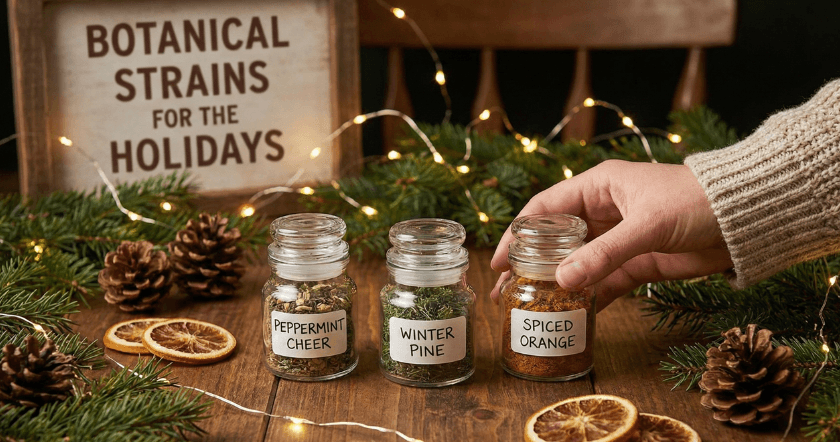
What Botanical Strain Should You Pick for Christmas And New Year Mood
We all know that the holiday season has arrived and many of us will want to celebrate Christmas with cozy vibes. The natural botanicals enhance our moods during festivals. Celebration or a quiet evening in front of a fireplace requires the right strain. However, the challenge is to choose the best strain according to your desire. If you want a relaxing stay to enjoy your Christmas evening or want the balance of energized and harmonious then this guide is for you.
Tap to Access Wholesale Savings Today!
Understanding The Different Strain Categories: Energy, Relaxation, And Balance
Before diving into the best botanical strains for the holiday season, it’s important to understand how strains can impact your mood.
Generally, strains are categorized into three broad types:
1. Energy-Boosting Strains For The Holiday Buzz
Energy-enhancing botanical strains can be your friend, especially when you are planning to be the life of the party at this holiday season. These strains are also characterized by their power to invigorate the body and to activate the mind making you remain focused and alert.
Hemp-Derived Strains For Energy
Hemp-based botanical strains are a popular choice for those seeking a non-psychoactive experience with an energy boost. Many hemp strains are rich in CBD, a natural compound known for its calming effects. When you mix them with a THC, the effects can shift toward a more stimulating experience.
Best Energy-Boosting Hemp Strain
- Sour Diesel (Cannabis Sativa): Sour diesel is an old type of cannabis, which is famous due to its stimulating properties. This strain provides a wave of euphoric energy, which will suit to be active during a social event or in performing some chores in a vacation. The energizing properties of Sour Diesel will put you in a better mood and keep you focused.
- Super Lemon Haze (Cannabis Sativa): This uplifting strain is perfect for those who want to stay energized without feeling too overwhelmed. The strains are perfect when one wishes to have a feeling of calmness on the colder days.
Try Kratom Gorilla: The Monkey 75mg – Bedrock Botanicals
2. Relaxation-Inducing Strains For a Cozy Christmas Eve
The strains are perfect when one wishes to have a feeling of calmness on the colder days, when a person tries to feel at ease but is not overwhelmed.
Best Relaxing Hemp Strains
The relaxing strains are also generally higher on CBD and lower on THC but others can have low amounts of THC to give the feeling of ease and comfort.
Best Relaxing Hemp Strain
- Granddaddy Purple (Indica Hybrid): This strain is one of the best to take when you desire to relax after a hectic holiday season due to its calming effects. It will aid in relaxation and will create a relaxing sleepy mood to the people who would want to be relaxed but not too drowsy. It tastes like berries which makes it a nice choice on the party evenings.
- Lavender Kush (Indica Hybrid): It is one of the best strains that one can use to unwind after a hectic day. Lavender Kush is valued because of its relaxing and soothing effect. The relaxing effect of this strain is the best fit to people who wish to have a back seat, a hot drink, and relax.
3. Balanced Strains For a Harmonious Holiday
While some days you might crave an energy burst and other days demand relaxation, balanced strains provide the best of both worlds. These strains give you a moderate amount of energy, paired with relaxing effects, making them perfect for a busy holiday schedule.
Best Balanced Hemp Strains
Balanced strains provide a smoother ride as are best suited in a case where one does not want to be too excited or too laid back.
Best Balanced Hemp Strain
- Cannatonic (Hybrid): Cannatonic is a balanced hybrid strain that delivers a gentle, even effect. Its CBD-to-THC ratio makes it a great choice for those who seek a steady, well-rounded experience.
- Blue Dream (Hybrid): Another fan favorite, Blue Dream strikes a perfect balance between energy and relaxation. It’s known for providing a euphoric high while keeping you calm and collected.
How To Choose The Right Strain For Your Holiday Mood?
Choosing the right strain for your holiday mood boils down to understanding how you want to feel during your celebrations. Here are some key tips to help you pick:
Consider The Event: If you’re attending a lively Christmas party, an energy-boosting strain like Sour Diesel or Super Lemon Haze might be your best bet. On the other hand, if you’re planning a quiet evening at home with family, Granddaddy Purple or Lavender Kush will help you unwind.
Your Mood: Do you want a burst of creative energy or do you need something to help you relax after a hectic day? If it’s the latter, a balanced strain like Blue Dream or Cannatonic will suit you perfectly.
The Time Of Day: For daytime activities, opt for strains that offer clarity and focus, while evening hours can benefit from relaxing or balanced strains that prepare you for a peaceful night’s rest.
Conclusion
This holiday season, whether you’re looking to amp up your energy for festive celebrations or unwind for a peaceful evening, choosing the right botanical strain can significantly enhance your mood. Ultimately, selecting the right strain depends on your personal preferences and the specific mood you want to create this Christmas and New Year. So, choose wisely, relax, and enjoy the holiday season with a touch of natural bliss.
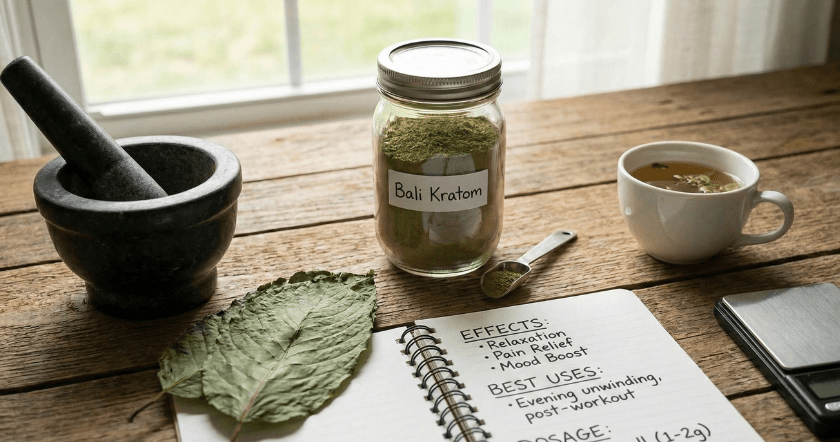
Bali Kratom: Effects, Best Uses & How To Dose
Bali Kratom is among the most popular kratom in the kratom community. It is known to be smooth, balanced, and alkaloid with a good performance that has made it a favorite to both first time users and those who have been using it long before. Bali has a positive point whether you are looking to it on a daily basis as an overall wellness tool, a boost in productivity, or a better mind-body connection.
What Is Bali Kratom?
Although it is called so, Bali Kratom is not necessarily cultivated in Bali. In the past, it was exported via the ports in the island and as a result, the name gained wide adoption. The Bali Kratom today is mostly obtained via:
- The Southeast Asian forests
- The tropical areas in Indonesia
- Borneo’s mature kratom farms
Along with this, the strains of Bali are usually associated with dense populations of alkaloids. It includes mitragynine and 7-hydroxymitragynine that prevent them from being too energizing.
Unlock Exclusive Deals — Join Our Wholesale Program Now!
History & Origin Of Bali Kratom
Despite the name, Bali Kratom did not originally grow on the island of Bali itself. Rather, the strain was brought to fame on a global scale as Bali was a significant export and trading center thus kratom found its way to international markets via the neighboring parts of Indonesia.
The majority of real Bali Kratom is grown in the rich forests of Borneo and some other regions in Indonesia, where mature trees of Mitragyna speciosa grow in fertile soil, in rainy humid climate and in tropical rainfall. Local populations traditionally used kratom leaves as a source of natural properties. They consume tea or chewing them while working long hours to increase stamina/
Effects Of Bali Kratom
Bali Kratom is considered a “middle-ground” strain. It doesn’t lean too far toward stimulation nor deep relaxation, but instead offers a steady, rounded experience. Here are the most commonly reported effects:
1. Gentle Relaxation & Mind-Body Ease
Bali Kratom is popular for creating a sense of comfort, making the body and mind feel lighter, calmer, and more at ease. Many users describe an overall soothing, unwinding sensation, especially after long hours of work or physical exertion.
2. Enhanced Mood And Uplifted Outlook
This strain is well known for supporting:
- A brighter frame of mind
- More stable emotional balance
- A general uplifted sense of well-being
Users often report that Bali helps them move out of mental heaviness or low-mood episodes and shift toward a more optimistic headspace.
3. Improved Daily Comfort
Without naming sensitive or restricted terms, Bali Kratom leaves are widely used to bring relief from bodily discomfort that naturally builds up due to:
- Long work shifts
- Heavy lifting
- Active lifestyles
- Overworked joints or muscles
Many find it helps them move more freely and maintain comfort throughout the day.
4. Better Sleep Readiness (At Higher Servings)
While small servings may help with focus, larger servings are often preferred at nighttime to support:
- A calmer internal rhythm
- Easier nighttime wind-down
- A more relaxed transition into sleep
5. Mild Boost In Motivation & Focus (Low Serving)
At low amounts, Bali Kratom can offer:
- Sharper mental clarity
- Smoother focus
- Steady motivation without jitters
Third Eye vs Kratom Gorilla: Which Suits You Best?
What Are The Best Uses Of Bali Kratom?
Because of its balanced nature, Bali Kratom is versatile. Here are the top use-cases:
Daily Wellness Routine
Bali is commonly used by individuals who want a mild, dependable effect each day. It provides a gentle sense of well-being without being overwhelming.
Post-Work Unwinding
After long working hours or physical activity, Bali helps the body release built-up tightness, and unease, making it perfect for evening relaxation.
Mood Enhancement
Many people turn to Bali Kratom for support during moments of:
- Emotional heaviness
- Mental exhaustion
- Low enthusiasm
- General dullness
It naturally helps refresh positivity and outlook.
Kratom Gorilla: The Monkey 75mg – Bedrock Botanicals
Comfort After Physical Exertion
Athletes, gym-goers, and labor-intensive workers often use Bali for support after intense activity. It contributes to:
- Smoother mobility
- Greater bodily ease
- Reduced physical discomfort
Better Sleep Preparation
When taken at night in slightly larger servings, Bali can help prepare the mind for deeper calm and rest.
How To Dose Bali Kratom?
Bali Kratom’s dose depends on serving size. Below is a safe, practical dosing guide for beginners and experienced users.
1. Low Serving (1–2 grams)
Good for:
- Mental clarity
- Motivation
- Light mood lift
- Mild focus enhancement
This is ideal for daytime use.
2. Moderate Serving (2.5–4 grams)
Good for:
- Balanced effects
- Emotional uplift
- A calm, centered headspace
- A mix of both clarity and relaxation
The majority of users prefer this range.
3. High Serving (4.5–6 grams)
Good for:
- Deep relaxation
- Greater comfort
- Nighttime calm
- Preparing for rest
This range is best for evenings or before bed.
4. Very High Serving (7+ grams)
Not recommended for beginners. Higher amounts may cause:
- Sedation
- Discomfort
- Reduced clarity
Always start low and adjust gradually.
How To Take Bali Kratom?
You can take Bali Kratom using several common methods:
- Mix with Warm Water or Juice
- Capsules
- Toss-and-Wash
- Brew as Tea
How Long Do Bali Kratom Effects Last?
Most users experience effects for 3–5 hours, depending on:
- Body weight
- Metabolism
- Whether taken with food
- Serving size
Beginners should always wait at least 45–60 minutes before adding more.
Side Effects & Safety Tips
Though generally well tolerated, using too much Bali Kratom may lead to:
- Stomach upset
- Temporary dizziness
- Dry throat
- Difficulty focusing
To avoid these issues:
- Start with small servings
- Stay hydrated
- Avoid mixing with alcohol
- Don’t take large servings back-to-back
Who Should Consider Bali Kratom?
Bali Kratom is ideal for people seeking:
- A balanced, gentle strain
- Help with body discomfort after physical activity
- Improved daily mood
- Better emotional stability
- Evening relaxation
- Nighttime calm
- Mild motivation and productivity support
It’s a flexible, beginner-friendly strain that suits most lifestyle needs.
Final Thoughts: Is Bali Kratom Worth Trying?
Bali Kratom remains one of the most popular strains for good reason. It offers well-rounded effects, reliable consistency, and versatility for both day and night use. Whether you’re seeking heightened emotional balance, bodily ease, improved motivation, or smoother sleep preparation, Bali stands out as a dependable choice.
For beginners, it’s often the perfect introduction to the world of kratom, gentle, effective, and easy to work with.
Kratom Gorilla: Red Bali – Bedrock Botanicals
FAQs
Can Bali Kratom Help With Mood And Daily Outlook?
Many users report that Bali provides a brighter emotional tone, helping them move away from heaviness, dullness, or mental unease.
Are There Any Side Effects Of Bali Kratom?
Possible side effects usually occur only with large servings and may include stomach discomfort, dry mouth, temporary dizziness, or reduced alertness..
How Quickly Does Bali Kratom Start Working?
Most users begin to feel Bali Kratom within 15 to 40 minutes. The exact timing depends on whether it’s taken on an empty stomach, your digestion speed, and the form used (powder usually activates faster than Kratom capsules).
Can Bali Kratom Be Used During The Day?
Yes, when taken in lower servings, Bali Kratom can support mental clarity, smoother focus, and steady motivation without causing drowsiness.

Best Kratom For Energy: Top 7 Strains For Daytime Focus
Many people now use Kratom as a natural approach to increase motivation, promote productivity, and maintain mental acuity throughout the day. Some strains are well-liked for their boosting, stimulating qualities, while others provide relaxation or nighttime quiet. This is especially true for professionals, students, outdoor laborers, and anybody else who requires continuous attention without the crash of coffee or energy drinks.
However, different strains of Kratom have different effects. Different alkaloid balances found in each strain affect how relaxing or exciting it feels. This article explains the top 7 daytime Kratom strains, how they function, how to use them optimally, and what to anticipate if you’re searching for the finest Kratom for energy.
How Kratom Increases Focus And Energy
The alkaloids in Kratom, particularly mitragynine, are what give it its inherent stimulating properties. Many strains function similarly to a moderate stimulant at lesser Kratom dosages, providing:
- Enhanced mental lucidity
- Increased focus
- Increased drive
- Increased awareness
- Mildly improved mood
- Support for productivity without jitters
Kratom’s energy is often smoother, more stable, and lasts longer than caffeine’s. Serving size and strain, however, have a significant impact.
Unlock Exclusive Deals — Join Our Wholesale Program Now!
What To Look For When Selecting The Best Energy Strain
When choosing the best Kratom strain for the day, take into account:
1. Color Of Veins
- White Kratom strains are the most energizing and invigorating.
- Green Kratom strains are balanced in concentration and mood enhancement
- Red Kratom strains are usually not the best for energy since they are relaxing.
2. Profile Of Alkaloids
There is a substantial correlation between excitement and higher mitragynine content, which is present in whites and certain greens.
3. Individual Sensitivity
Some prefer smooth attention, whereas others prefer intense stimulation. Set a low starting point and make adjustments.
The Top 7 Kratom Strains For Focus And Energy During The Day
1. The Most Common Energy Strain: White Maeng Da
Ideal For: Prolonged, intense drive and output.
Level Of Energy Concentration
Most people agree that White Maeng Da Kratom is the strongest energy Kratom strain on the market. The white-vein form of “Maeng Da,” which already has a high potency, is renowned for providing:
- Strong mental clarity
- Strong inspiration
- Persistent energy
- Increased output
- A cheerful, self-assured attitude
White Maeng Da is the best choice if you’re looking for a potent, clean strain for the day.
Perfect For: Gym-goers, busy professionals, students, and anyone in need of 4 to 6 hours of focused driving.
2. Green Maeng Da: Focus And Balanced Energy
Ideal For: Jitter-free, smooth stimulation during the day
Level Of Energy Concentration:
The finest of both worlds is provided by Green Maeng Da Kratom:
- More energizing than the majority of greens
- Not as strong as White Maeng Da Kratom
Anticipate reduced “edges,” enhanced drive, elevated mood, and clear, consistent focus. Because this strain seems balanced and natural, many people choose it for daily usage.
Perfect For: Studying, workdays, creative activities, and sustaining energy without becoming overstimulated.
3. White Borneo: Clear, Calm Mental Energy
Ideal For: Increased focus and mental alertness
Level Of Energy Concentration:
White Borneo is renowned for its mild yet potent stimulation. Although it doesn’t strike as forcefully as Maeng Da, it provides:
- Smooth mental energy
- Improved mental acuity
- Regular inspiration
- Very little crash
If you want energy but don’t want to feel “wired,” it’s fantastic.
Perfect For: Light to moderate energy demands during the day, suitable for beginners.
4. White Borneo: Clear, Flowing Mental Energy
Ideal for: Sharper focus and mental alertness
Level Of Energy Concentration:
White Borneo is renowned for providing stimulation that is both delicate and powerful. Although it is not as powerful as Maeng Da, it provides:
- Easy cognitive energy
- Increased mental lucidity
- Regularly motivated
- Minimal collisions
If you want energy but don’t want to feel “wired,” it’s fantastic.
Perfect For: Light to moderate energy demands, beginner-friendly during the day.
5. White Thai: Powerful Encouragement & Inspiration
Ideal For: An invigorating “kick” to begin the day
Energy Level Concentration
Often referred to as the “energy of coffee but cleaner,” White Thai Kratom is one of the best energizing strains. Anticipate:
- Quick-acting stimulation
- A significant increase in motivation
- Enhanced emotional state
- High level of mental awareness
It’s a favorite for early mornings or days that call for intense motivation and attention.
Perfect For: High-energy pursuits, exercise, and productivity in the morning.
6. Green Indo: A Soft Focus For Moderate Energy Requirements
Ideal For: Clear head and light stimulation
Level Of Energy Concentration:
Green Indo provides a soft pickup with great clarity, although it is not as exciting as Maeng Da or White Thai. You will receive:
- Clean, gentle energy
- Enhanced focus
- Calm awareness
- Harmonious mood
For individuals who like concentration without a lot of stimulation or who are sensitive to stronger white Kratom strains, this is ideal.
Ideal for: Daily chores, light workdays, reading, and errands.
7. White Bali: Positive Attitude And Pure Energy
Best For: Maintaining attention while providing mood support
Level Of Energy Concentration
White Bali Kratom provides a mild mood rise as well as an increase in clarity. It’s always energetic and smooth, although it doesn’t hit as hard as White Maeng Da.
- Experience
- Consistent energy during the day
- Better emotional equilibrium
- Discomfort-free and focused
- A little increase in motivation
Perfect For: Social situations, occupations with customers, and creative projects.
Kratom Gorilla: The Monkey 75mg
How Much Kratom Is Suitable For Energy?
Reduced portions = stimulation
Increased portions might cause relaxation, which is the reverse of what you desire.
Typical quantities during the day:
- Novice: 1–1.5 grams
- 1.5–2 grams of mild energy
- 2-3 grams of moderate energy and concentration
- 3–4 grams for strong stimulation
Avoid consuming more than 4 grams for energy since, depending on the strain, it may become sedative.
Crucial: Always start small, especially when using strong strains like Thai or Maeng Da.
Conclusion
Your personal objectives, tolerance, and how your body reacts to various Kratom strains all play a role in selecting the best Kratom for energy. But the best midday varieties, like White Maeng Da, Green Thai, White Borneo, and other uplifting strains, regularly provide mental clarity, motivation, and pure focus without the jittery crash of caffeine. You may find the ideal energizing Kratom strain for your requirements by starting with low dosages and carefully testing, regardless of whether you’re working, studying, or just need a productivity boost.
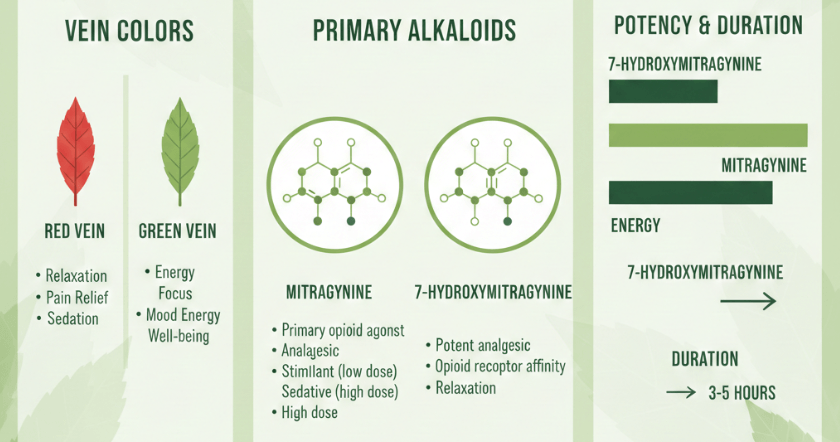
Infographic: Kratom Alkaloids – Effects, Potencies & Vein Colors
Kratom (Mitragyna speciosa) is a natural herb that has drawn interest from all over the world due to its calming, uplifting, and mood-enhancing properties. Every Kratom experience is rooted in a complex chemistry of plant alkaloids, which are the substances that give the plant its distinct array of effects.
We’ll examine how the alkaloids in Kratom interact with different vein colors, how they affect potency and mood, and what this implies for selecting the best Kratom strain for your needs in this thorough guide.
1. Knowledge Of Kratom Alkaloids
Although there are more than 40 bioactive alkaloids in Kratom, two predominate in both concentration and effect:
- The most prevalent alkaloid, mitragynine, accounts for 60–70% of the total content.
- The considerably tiny but highly powerful alkaloid 7-hydroxymitragynine (7-OH)
Speciogynine, paynantheine, and speciociliatine are examples of other small alkaloids that affect mood, energy levels, and muscular relaxation.
Alkaloids’ Function
In contrast to synthetic opioids, Kratom alkaloids operate partially on mu-opioid receptors in the brain and spinal cord, providing comfort and tranquility without the same risk of respiratory suppression.
Additionally, they interact with the serotonergic (mood) and adrenergic (energetic) pathways, which gives Kratom its balanced dual nature—it is calming at larger dosages and stimulating at lower ones.
2. The Alkaloid Profiles Of Kratom Vein Colors
A colored vein, either red vein Kratom, green, or white, runs through the center of each Kratom leaf, signifying the alkaloids’ ratio and maturation level. The balance between mitragynine and 7-hydroxymitragynine, which shapes the actions of the plant, is intimately correlated with these vein colors.
The effects of vein color on alkaloid content and experience are shown below:
| Colour Of Vein | Basic Alkaloid | Impact Of Profile | Ideal For |
| White Kratom vein | High mitragynine and low 7-OH levels | Energizing, concentrating, and elevating | Vitality and efficiency |
| Green Kratom vein | 7-OH with mitragynine in balance | Balanced mood, relaxation, and mild energy | Social comfort and all-day usage |
| Red Kratom vein | Higher 7-OH and lower mitragynine | Relaxing, calming, and discomfort-relieving | Sleep, rest, and recuperation in the evening |
3. Overview Of Alkaloid Potency And Effects
The key alkaloids in Kratom, their potencies, and their primary impacts are broken down below, making it easy to see what influences the plant’s general behavior.
| Name Of Alkaloid | Potency in Relation | Key Impacts | Found in (Type of Vein) |
| The mitragynine | Moderate | Restlessness alleviation, energy, concentration, and slight euphoria | Mostly present in white and green |
| 7- Hydroxymitragynin | High | Intense analgesia, relaxation, and sedation | Red and mature leaves |
| Speciogynine | Mild | Relaxation of muscles; equilibrium of smooth muscle | Every color of veins |
The compounds have a synergistic effect on one another — a phenomenon known as the “entourage effect.” This interaction clarifies how it is possible for each strain to have its own distinct personality even though they all contain the same primary alkaloids.
4. The Impact Of Vein Color On User Experience
White Vein Kratom – The Morning Kick-Starter
Alkaloid: Mitragynin
Effects: Increases alertness, drive, and endurance.
Typical Strains: White Borneo Kratom, White Maeng Da Kratom, White Thai Kratom
Optimal Use Time: In the morning or while working/studying
People seeking natural energy and concentration without the jittery crash associated with caffeine often favor white veins.
Green Vein Kratom – A Harmonious Compromise
Prevailing Alkaloids: Balanced mitragynine and 7-OH
Effects: Seamless blend of clarity, tranquility, and gentle euphoria.
Common Varieties: Green Malay, Green Maeng Da, Green Indo
Optimal Usage Time: During the day or in social contexts
Green veins are commonly known as the “all-day strains” due to their perfect combination of stimulation and relaxation.
Red Vein Kratom – The Evening Calmer
Alkaloid Mit Dominierender Stellung: 7‑Hydroxymitragynin
Effects: Encourages tranquility, alleviates discomfort, and promotes restorative sleep.
Typical Strains: Red Thai Kratom, Red Borneo Kratom, Red Bali Kratom
Optimal Usage Time: Evening or before sleeping
Red veins are perfect for relief and recuperation, making them a preferred choice for individuals seeking to relax or handle discomfort in a natural way.
Unlock Exclusive Deals — Join Our Wholesale Program Now!
5. The Infographic Analysis: “Kratom Alkaloids & Vein Effects”
When you depict Kratom’s chemistry as a chart, the relationships appear as follows:
Oberste Reihe: Alkaloide → Mittlere Reihe: Venenfärbungen → Bottom Row: Effects
- White Vein → Elevated Mitragynine → Energy, Concentration, Incentive
- Green Vein → Balanced Mitragynine & 7-OH → Mood Equilibrium, Slight Euphoria
- Red Vein → Elevated 7-Hydroxymitragynine → Relaxation, Alleviation of Discomfort, Sleep
Potency Scale (1 to 5):
- Mitragynine = 3/5 (reliable and enduring)
- 7-Hydroxymitragynine = 5/5 (intense and with a short effect)
- Minor alkaloids = 2/5 (supportive and modulatory)
6. The Science Of Synergy: The Importance Of Ratios
It’s not only a matter of which alkaloids are there — it’s also about their interactions.
- When the mitragynine ratio is high, stimulation and alertness are favored.
- An elevated 7-OH ratio intensifies sedation and analgesia.
- Minor alkaloids help to adjust mood, clarity, and tolerance.
This is the reason why each Kratom strain possesses a distinct feel, even when cultivated under comparable conditions. Aspects such as soil nutrient levels, timing of harvest, and drying techniques also influence the conversion of alkaloids.
7. Accountable Use And Significance Of Quality
Since the levels of alkaloids differ depending on the region and processing, it’s crucial to:
- Purchase from reputable vendors that have been lab-tested.
- Do not combine Kratom with other stimulants or depressants.
- Employ moderate dosages and incorporate breaks for tolerance.
This guarantees that you safely experience the natural effects of Kratom as intended.
8. The Prospects For Research On Kratom Alkaloids
Researchers are exploring the potential for plant-based treatments for uneasiness, fatigue, and discomfort through the selective extraction of the best Kratom’s alkaloids. The current emphasis is on creating standardized Kratom profiles—products that ensure consistent levels of mitragynine and 7-OH without the use of synthetic additives.
With the advancement of science, knowledge about the connection between alkaloids, potency, and vein color aids users in making informed and responsible decisions.
Kratom Gorilla: The Monkey 75mg Try Now
Conclusion
The rich combination of alkaloids in Kratom—most notably mitragynine and 7-hydroxymitragynine—produces a variety of effects as these compounds interact, resulting in distinct experiences tied to different vein colors. White vein strains are known for their energizing and focusing effects, while green veins offer a middle ground between stimulation and relaxation.
Red veins are preferred for their calming and analgesic properties. Users can select Kratom strains that correspond with their wellness goals by understanding how these alkaloids affect the herb’s potency. No matter if you are looking for tranquility, clarity, or comfort, an understanding of the science underlying Kratom’s alkaloids enables a more thoughtful and effective use.

Kratom And Mental Health: What Research Says
The tropical evergreen tree known as Kratom (Mitragyna speciosa) is indigenous to Southeast Asia, particularly Thailand, Indonesia, and Malaysia. Local populations have been using its leaves for vitality, discomfort treatment, and mood improvement for ages. However, mitragynine and 7-hydroxymitragynine (7-OH), two alkaloids that have attracted the greatest interest from both academics and consumers, are the main culprits for these effects.
We’ll discuss these substances, their physiological functions, and their importance in comprehending the intricate profile of Kratom in this blog post.
1. What Are Alkaloids And What Makes Them Important?
Alkaloids are nitrogen-containing chemical molecules that are found in nature and have significant physiological effects on people. These substances are responsible for the energizing or calming effects of several well-known plants, including coffee (caffeine), tea (theophylline), and chocolate (theobromine).
Although more than 40 alkaloids have been found in the best Kratom, mitragynine and 7-hydroxymitragynine are thought to be the most prevalent and pharmacologically active.
2. The Main Alkaloid, Mitragynine
The most prevalent alkaloid in famous Kratom leaves is mitragynine, which accounts for 60–70% of the overall alkaloid content. It is crucial in determining the stimulating and analgesic properties of the plant.
How It Operates
Although it functions differently from typical opioids, mitragynine interacts with mu-opioid receptors in the brain, which are the same receptors that conventional discomfort relievers target. Mitragynine functions as a partial agonist rather than fully activating these receptors, which means it relieves symptoms without having the full sedative or respiratory-depressant effects of stronger opioids.
It also contributes to the stimulating and mood-enhancing effects of Kratom by interacting with the adrenergic, serotonergic, and dopaminergic systems.
Important Mitragynine Effects
- Little increase in attention and vigor (particularly at lower dosages)
- Improved motivation and mood
- Moderate to high dosages of natural restlessness alleviation and relaxation
- Fewer adverse effects in comparison to more potent opioids
3. The Strong Metabolite 7-Hydroxymitragynine (7-OH)
Despite making up less than 2% of the leaf’s total alkaloid profile, 7-hydroxymitragynine has a far greater efficacy than mitragynine, which predominates in quantity.
Why It’s So Effective
As a metabolite of mitragynine, 7-OH is created during the body’s processing of mitragynine. When compared to traditional analgesics, it significantly reduces uneasiness because of its stronger binding to mu-opioid receptors. But because of its strength, it’s also the substance most frequently linked to the calming and sedative properties of Kratom.
7-Hydroxymitragynine’s Principal Effects
- Powerful analgesic (discomfort-relieving) effects
- Discomfort reduction and profound relaxation
- Higher dosages of sedation
- Shorter duration of effects than those of mitragynine
4. The Equilibrium Between 7-OH And Mitragynine
The ratios of these alkaloids in various Kratom strains, such as Green Maeng Da Kratom, Red Bali Kratom, or White Borneo Kratom, vary, resulting in distinct effects.
White and Green Strains: Higher amounts of mitragynine are typically found in White and Green strains, which lead to more stimulating and uplifting experiences.
Red Strains: Conversely, Kratom red strains frequently have greater 7-OH contents, which promote deeper relaxation and uneasiness relief.
This equilibrium explains why Kratom users frequently try different famous Kratom strains and Kratom dosages to see what suits them the best.
5. Interest In Science And Medicine
The alkaloids in Kratom have drawn interest from experts worldwide who are searching for safer substitutes for conventional opioids. Although further study is required to validate these findings, preliminary investigations indicate that mitragynine and 7-OH may offer effective discomfort treatment with lower risks of respiratory discomfort or overdose.
Researchers are also investigating how Kratom’s distinct profile—often referred to as the “entourage effect”—is influenced by its multi-alkaloid synergy, which includes more than simply mitragynine and 7-OH. This suggests that the behavior of the principal alkaloids in the body may be modulated by the lesser ones.
6. Regulation, Safety, And Conscientious Use
The alkaloids in Kratom are still under investigation despite encouraging studies because of worries regarding abuse, dependence, and inconsistent dosage. While some areas allow the sale of Kratom products as Kratom herbal supplements, others regulate or outright prohibit them.
For Customers, This implies
- To guarantee purity and correct labeling, only purchase from reliable, laboratory-tested suppliers.
- Kratom should not be used with other stimulants or depressants.
- To avoid developing a tolerance, use modest dosages and take pauses.
Maintaining Kratom’s safety and reputation requires responsible use and appropriate education.
7. Kratom Alkaloid Research’s Future
The goal of ongoing research is to separate mitragynine and 7-OH and get a better understanding of their potential medicinal applications. Scientists in the pharmaceutical industry are already developing synthetic analogs that minimize negative effects while mimicking the positive Kratom effects.
Both mitragynine and 7-hydroxymitragynine will continue to play a major role in arguments on the safety, legality, and possible medicinal benefits of Kratom.
Conclusion
The primary components of Kratom’s intricate pharmacology are mitragynine and 7-hydroxymitragynine. Together, they produce the harmony of relaxation, discomfort alleviation, and excitement that characterizes the Kratom experience. In addition to assisting consumers in making better decisions, knowledge of these alkaloids advances science’s efforts to create safer, plant-based remedies for restlessness and well-being.