
Blog
Does Kratom Foam Mean It’s Stronger Or Weaker?

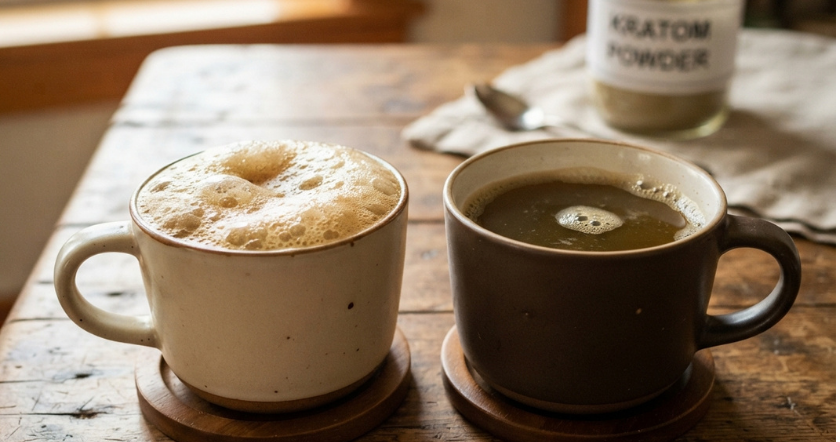
Have you prepared a cup of Kratom and noticed a layer of foam on the top of it? You may have wondered if this foam indicates that it is stronger or weaker, fresher or different in some ways from the rest of the powder. It’s a typical question that many Kratom users ask, particularly in online forums where people discuss how they’re preparing their Kratom and the look of their beverages.
So, the answer to this question is simply “no”, it is not a good measure of Kratom strength or quality. Several physical factors can contribute to a foamy surface: the vigorousness of the mixing of the powder, the fineness of the grind, the temperature of the liquid and the interaction between the plant materials and the water and air.
Why Does Kratom Foam When Mixed?
The powdered form of Kratom does not dissolve in water, or any other liquid, like sugar or instant coffee. Rather, very small particles of plants float in the fluid.
When making a mixture by shaking, stirring, whisking or blending, air is added into the mixture. Some of those air bubbles can be stabilized by fine particles and naturally occurring chemicals from the plant, which leave a visible foam layer at the surface.
Foam volume may be quite different between various preparations. If you discover more foam when:
- Shake the drink in a shaker or bottle.
- A blender or frother is used.
- Kratom powder is extremely fine.
- A large quantity of powder in less water.
- The temperature of the water affects the dispersion of the powder.
- The powder is a mix of a different blend of natural plants.
Does More Foam Mean Stronger Kratom?
Not necessarily.
Many people think that if there is a thicker layer of foam, the more active plant compounds it contains. However, the amount of foam produced on a beverage cannot be used to ascertain the level of certain alkaloids.
There may be several explanations for a foamier mixture: more air may have been added to the mixture when it was made, or the powder particles may have been suspended better.
In other words:
The more foams, the more not necessarily the stronger Kratom.
Likewise:
The amount of foam ≠ necessarily the strength of the Kratom.
Can Weak Kratom Produce a Lot Of Foam?
Yes. Even if you are unaware of a product’s alkaloid makeup, it can generate considerable amounts of foam.
Let’s say you’re making two cups of tea with two different batches:
- Cup A is shaken for 20 seconds.
- Cup B is stirred simply with a spoon.
Even if the same plant material was used, the amount of foam generated in Cup A would be much greater because there is more air in the liquid.
The same rule goes when comparing various preparation tools. Gentle stirring will produce many fewer bubbles than a blender, milk frother, or a shaker bottle.
This is the reason why it is particularly unreliable to make comparisons between foams of drinks with similar alcoholic content made by different methods.
Kratom Foam: Is It Normal Or a Cause For Concern?
Can Strong Kratom Produce Very Little Foam?
Yes. A low-foam drink does not automatically indicate a weak batch
If the powder was gently mixed, allowed to settle, or prepared with a different liquid-to-powder ratio, the surface may appear relatively smooth. Foam can also disappear over time as bubbles break and release the trapped air.
A person who looks at the drink five minutes after preparation may see a completely different surface than someone who looks immediately after shaking it.
What Actually Causes Differences In Kratom Foam?
Several physical characteristics can influence how a Kratom drink looks after mixing.
1. How Vigorously You Mix It
This is often one of the most obvious factors.
Shaking introduces air into the liquid and can produce a thick layer of small bubbles. Stirring slowly introduces much less air.
If you want to compare the appearance of two batches, use the same:
- Amount of powder
- Amount of liquid
- Container
- Mixing time
- Mixing method
- Water temperature
Even then, foam alone still cannot confirm strength.
2. Powder Fineness
Finely milled Kratom powder has a larger total surface area exposed to the liquid than coarser particles.
This can affect how quickly the powder disperses and how the mixture behaves when shaken. A very fine powder may also remain suspended longer, creating a different appearance from a coarser grind.
3. Water Temperature
Temperature can change the way plant particles disperse and how easily bubbles form or disappear.
A mixture prepared with warmer water may not look the same as one prepared with cold water, even when the exact same Kratom powder is used.
4. Powder-To-Liquid Ratio
A concentrated mixture may look thicker and behave differently from a more diluted one.
Using twice as much liquid, for example, can change the visual appearance of the suspension and the amount of foam that remains on top.
Monarch White Elephant Kratom | Powder & Capsules
Is Foam a Sign Of Fresh Kratom?
Not by itself.
Freshness is another quality that cannot be reliably judged from foam alone. A fresh powder and an older powder may both produce foam if they are mixed in the same way.
Instead of relying entirely on appearance, consumers who are evaluating a botanical product may consider factors such as:
- Whether the supplier provides batch information
- Storage conditions
- Packaging integrity
- Product traceability
- Whether the material has been exposed to excessive moisture
- Available independent testing information, where applicable
Can You Test Kratom Strength At Home By Looking At The Foam?
No reliable visual method can accurately determine alkaloid content.
Internet discussions sometimes suggest using color, bitterness, smell, foam, or texture to judge whether a batch is “strong.” These observations may describe the product’s physical characteristics, but they do not replace analytical testing.
Two products can look similar while having different chemical profiles. Conversely, two batches can look noticeably different while still sharing some similarities in composition.
If specific alkaloid information is important, the most meaningful data comes from appropriate analytical testing rather than a visual observation made after mixing.
Why Does The Foam Sometimes Disappear Quickly?
Foam is made up of air bubbles. Over time, those bubbles can merge, pop, and release air.
The rate at which foam disappears can depend on:
- Bubble size
- Mixing intensity
- Temperature
- Particle concentration
- The composition of the liquid
- How long the mixture has been sitting
A rapidly disappearing foam layer does not automatically mean that the Kratom has changed in strength. It usually reflects the natural instability of bubbles in a liquid mixture.
The Bottom Line
A foamy Kratom drink may look different from a smooth one, but foam is not a reliable indicator of strength, potency, freshness, purity, or overall quality.
The amount of foam can be influenced by simple preparation factors, including:
- How hard the mixture was shaken
- How finely the powder was ground
- The amount of liquid used
- Water temperature
- The type of container or mixing tool
- How long the mixture has been sitting
- Natural variation in the plant material
So, if one cup produces a thick foam and another does not, the safest conclusion is not that one is automatically stronger or weaker.
FAQs
Why does my Kratom foam so much when I shake it?
Vigorous shaking introduces a large amount of air into the liquid. Fine Kratom particles and naturally occurring plant materials can help create and temporarily stabilize bubbles, resulting in a visible foam layer..
Does Kratom foam differently with hot water versus cold water?
It can. Water temperature may influence how the powder disperses and how long bubbles remain visible.
Why does my Kratom foam disappear after a few minutes?
Foam naturally breaks down as air bubbles merge and pop. A disappearing foam layer is generally a change in the physical appearance of the mixture and does not, by itself, demonstrate a change in the product’s alkaloid content.
Disclaimer
This statement has not been evaluated by the Food and Drug Administration. This product is not intended to diagnose, treat, cure, or prevent any disease.